
Water and drought: the shift the triple-COP year cannot afford to get wrong
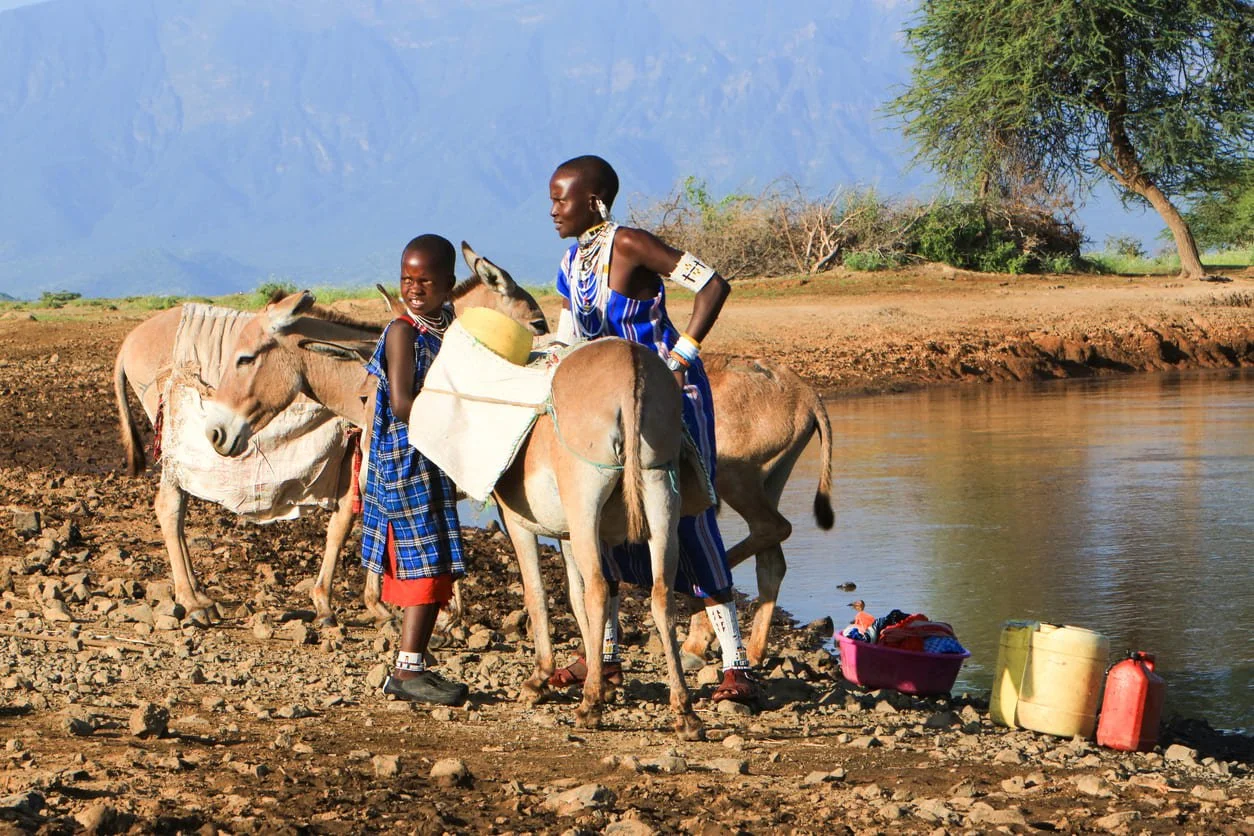
Photo by: @JordiStock - iStock
On 17 June, the world marked the World Day to Combat Desertification and Drought, hosted this year in Kenya, a rangeland-rich country that is highly exposed to the compounding pressures of land degradation and recurrent drought.
The message was unambiguous: land is the essential infrastructure for water security. Healthy soils, rangelands and wetlands are the natural systems that capture, store, and filter the water we rely on.
With UNCCD COP17 in Ulaanbaatar (17-28 August) less than two months away — and a triple-COP year seeking alignment across the land, biodiversity, and climate agendas more than ever before — the window to turn that message into integrated, accountable, financeable action for water and drought resilience is open.
So where does that shift stand, and who is driving it? Read on for a lay of the land…
💧 Water scarcity: a preventable social, economic and environmental crisis
The scale of the drought crisis is both staggering and accelerating. The World Drought Atlas, published by the UNCCD and the EC Joint Research Centre, estimates the annual global cost of drought at USD 878 billion, with 3.2 billion people directly impacted today, and investment needs to build resilience projected at USD 2.6 trillion by 2030. The World Meteorological Organization's State of Global Water Resources 2024 documents that extremely dry months are now 38% more common than the long-term baseline.
By 2050, three in four people worldwide are projected to face drought conditions, with cascading consequences for water and food security, economic stability. This makes drought one of the single largest drivers of forced migration this century. The UNCCD has been clear that it is no longer an exceptional weather event to be managed in hindsight. It is a chronic, compounding systemic risk whose effects are already visible in the competition over shrinking land and water resources that drives conflict, displacement, and rural collapse across dryland regions from the Sahel to Central Asia.
And yet the dominant model remains reactive. Financing arrives after a drought is declared; when livestock has died, crops have failed, and displacement has begun. But the OECD’s Global Drought Outlook fiinds that every dollar invested in drought prevention yields USD 2–3 in avoided costs, rising to up to ten times the initial investment for resilience-building. Early warning systems alone are estimated to save around 23,000 lives a year and generate up to USD 27 in returns for every dollar invested. The case for shifting from crisis response to forward-looking risk governance is one of the strongest investment cases in the adaptation space.
Drought monitoring tools, ecosystem restoration programmes, governance frameworks, and finance pipelines are all advancing. And in some regions, beginning to connect. Scaling and accelerating their impact is possible by aligning existing efforts behind a shared operational framework that can be measured, financed, and held accountable. COP17 in Ulaanbaatar is the next critical moment to lock that in, and the Riyadh Action Agenda (RAA) community is arriving with real-world momentum to show.
📢 Highlights from the field: the shift to drought readiness, in practice
This shift is within reach. The solutions exist, the science is mature and the case for investment is increasingly compelling. The RAA Community is proving this through tangible examples of what proactive drought resilience looks like when it reaches communities, landscapes, and investment pipelines at scale.
Making groundwater investable across the Horn of Africa
Over 70% of the population in the Horn of Africa depends on groundwater, yet the region's vast underground reserves have gone largely untapped, held back by fragmented governance, insufficient pre-feasibility data, and the simple absence of an investment pipeline. Administered by UNDP Resilience Hub for Africa, the Groundwater Access Facility (GAFA) is a collaborative initiative is closing the groundwater financing gap through 1) Water Assessment & Data Management; 2) Water Investments Pipelines development; 3) Governance and transboundary cooperation; 4) Institutional Strengthening and capacity building. GAFA is designed to coordinate UN-wide efforts, with the support of Intergovernmental Authority on Development (IGAD) Member States, to sustainably map, assess, and provide groundwater to transboundary regions in the Horn of Africa. Introduced at UNCCD COP16 in Riyadh with a USD 2 billion pipeline of 50 strategic projects, the pipeline has since grown to 64 bankable projects worth USD 3.05 billion across seven IGAD member states, targeting drinking water, sanitation, irrigation, livestock, industry and ecosystem services, with a deliberate focus on women, youth, and rural communities in the borderlands areas.
The tool scaling drought resilience intelligence accessibility
For decades, the bottleneck in proactive drought management has not been a shortage of knowledge, but the absence of tools that put the right knowledge in the right hands at the right moment. The International Drought Resilience Observatory (IDRO), aligned with the International Drought Resilience Alliance (IDRA), is a revolutionary open-source platform that bridges the gap between experts and decision makers. IDRO gives policymakers, land managers, and community leaders the ability to anticipate, prepare and adapt to drought, granting them access to key drought resilience indicators, interactive maps, data visualisation and AI-driven insights. Its prototype was unveiled at COP16 in Riyadh and the full version is set to launch at COP17 in Ulaanbaatar.
A replicable model for watershed resilience
Fondo de Agua Santiago-Maipo is a public-private partnership bringing together governments, companies and civil society around a shared mission: securing water for the people, organizations and ecosystems of Chile's Metropolitan Region. Their work focuses on the Maipo River basin, which supplies freshwater to Santiago's 7 million inhabitants and supports nearly half of Chile's GDP, yet faces a projected up to 40% reduction in water availability due to climate change. Through six strategic lines of action spanning water efficiency, ecosystem protection, risk management and integrated governance, the Fund is building a replicable model for watershed resilience. One of their most recent milestones: the signing of a tripartite agreement between FSC Chile, Parque Cordillera Association and the Water Fund to jointly protect and regenerate the upper basin. Their integrated, multi-stakeholder approach makes them a strong voice for water security within the RAA community.
So what?...
The world's landscapes are the natural infrastructure on which water security, food production, and climate adaptation all depend. Healthy soils absorb and store water; degraded soils repel it. Intact wetlands buffer floods and sustain dry-season flows; drained wetlands amplify both extremes. Managed rangelands hold water in the landscape; overgrazed ones lose it to runoff.
Integrated approaches and investments that protect rangelands and wetlands, restore watersheds, and improve land management deliver simultaneously against land degradation, biodiversity, and climate targets. Actors across sectors and geographies — from GAFA, unlocking access to water through the investment infrastructures that communities have lacked; to IDRO making decades of drought science operational for the people who need it to make decisions; to Fondo de Agua Santiago strengthening multi-stakeholder collaboration and integrated approaches to watershed resilience — through practice, remind us that proactive drought management should be treated not only as an adaptation priority, but also as a core requirement for sustaining land, biodiversity, climate, and water-related environmental benefits.
At the same time, drought readiness remains an institutional and physical infrastructure imperative with direct implications for how water resilience is financed, impacting ecosystem resilience, human livelihoods, security and migration. But drought monitoring, ecosystem restoration, governance reform and finance pipelines too often operate in parallel, with different metrics, timelines and reporting systems. The opportunity in this triple-COP year lies in aligning existing efforts into coherent and scalable systems for drought resilience.
At COP17, Water Day will advance proactive drought risk management and strengthen cooperation on integrated water resource management. Finance Day will put blended finance for water and land resilience on the table together. The Land & Soil Community Dashboard, powered by the RAA, will make non-state-actor contributions across global goals on land conservation, restoration, and drought and water resilience visible and measurable at scale — proving that the shift is already underway. In a year that centres rangelands and pastoralism in global multilateral negotiations, it is critical to link action to healthy rangelands with drought resilience, food security, local livelihoods and other economic and social priorities for countries and communities. The Land & Soil Breakthrough Coalitions under the Riyadh Action Agenda are exploring coordinated non-state actor efforts at the intersection of these interconnected agendas, and making the ambition loop unstoppable.
The Riyadh Action Agenda mobilizes public, private, and community actors behind state commitments on land conservation, restoration, drought resilience, and finance. This summer, it will launch the RAA Community Dashboard, aggregating and connecting all verifiable and results-oriented efforts driving measurable progress toward global goals on land restoration and water and drought resilience. To learn more and be featured in the RAA Community Dashboard, visit riyadhactionagenda.org or fill in this form directly.
👉 Want to be featured?
Let us know your plans, leading up to or at UNCCD COP17, by emailing land@ambitionloop.earth
Enjoyed this post? Subscribe to the newsletter!
This blog post was authored by the RAA Delivery team (Ambition Loop) as part of the Lay of the Land LinkedIn newsletter. Liked it?
