
Global security, agricultural land, and the choice before us
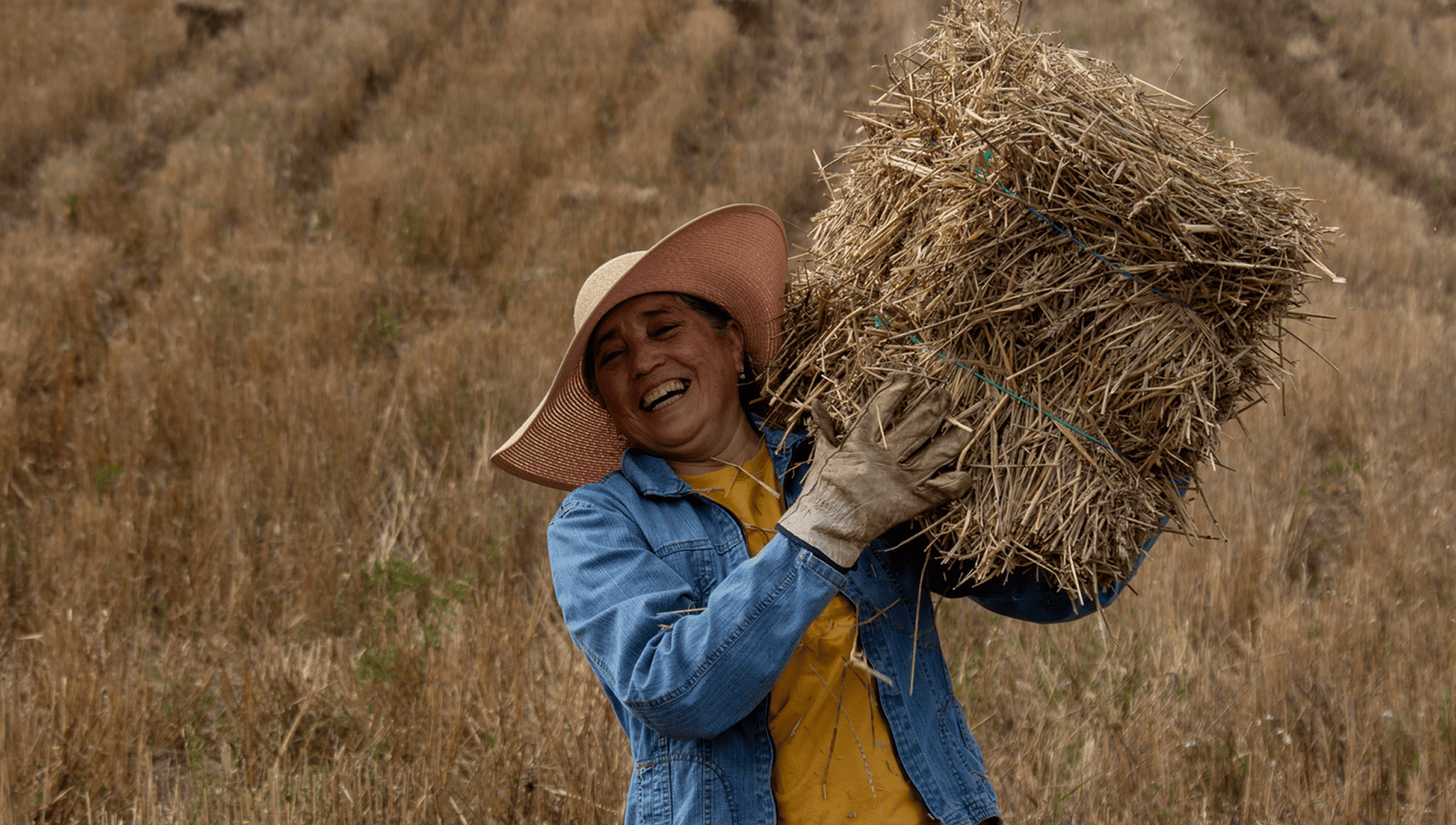
Photo by: @Lenin Suntaxi - iStock
Last month saw a significant shift in the politics of land restoration. G7 ministers formally declared that desertification, land degradation and drought are systemic global challenges and security risk multipliers – bringing these looming social, economic and security threats to the main agenda of global policy.
Ministers explicitly linked competition over shrinking land and water resources to displacement pressures and conflict risk. They committed to scaling up action on land restoration, drought resilience and sustainable land management, and indicated a move toward blended finance models to get there.
UNCCD Executive Secretary Yasmine Fouadwelcomed the G7 declaration while being direct about what it demands: "We are not dealing with an environmental issue alone, but a systemic risk to peace and stability. Global awareness has improved. Implementation remains the biggest gap."
COP17 (18-27 August – Ulaanbaatar, Mongolia) will be critical to close said gap. And private, public, and community actors are playing a key role in helping this happen, building a tangible record of collective action through the Riyadh Action Agenda (RAA).
So what is happening on the ground and how is it adding up? Read on for a lay of the land…
🌽 Agriculture and food systems: a fork in the road for global stability and human survival
The G7 declaration is putting political language around an all too real crisis. Nearly 40% of the world's land is already degraded, affecting an estimated 3.2 billion people at a cost of around $900 billion to the global economy annually – and driving over 40% of intrastate conflicts in the past six decades through competition over shrinking land and water resources.
And no other system embodies the challenge and its solution as much as agriculture and food. According to FAO, approximately 1.7 billion people already live in areas where crop yields are falling because of human-induced land degradation – translating directly into higher input costs, greater weather vulnerability, and thinner margins, particularly for the smallholder and pastoral producers who manage the majority of the world's agricultural land but capture the least of its financial value. The pressure is only intensifying: by 2050, the world will need to produce at least 50% more food, even as unsustainable land use remains the leading driver of the degradation that is making production harder.
But just as the challenge is quantifiable, so too are the opportunities. The UNCCD Financial Needs Assessment estimates that land restoration can deliver returns of up to USD 8 per dollar invested. Moreover, the UNCCD estimates that the restoration of degraded lands could generate an estimated annual economic flow of USD 1.8 trillion annually, driven by increased agricultural productivity, avoided carbon damages, reduced drought-related losses, and enhanced ecosystem services.
The economic argument is there, but what follows is the demonstration of real-world applications…
📢 Highlights from the field: What the right choice looks like
Through real-world action, the Riyadh Action Agenda (RAA) is demonstrating that restoring 250 million hectares of degraded agricultural land is financially viable and operationally replicable – at landscape scale, across governance levels, with frontline communities' livelihoods integrated into the model rather than treated as a downstream benefit.
Empowering smallholder farmer prosperity
One Acre Fund supports smallholder farmers to increase their incomes and build long term resilience by providing access to financing, farm inputs, training, and market access support. In 2025, One Acre Fund served 5.9 million farming households across 10 countries and generated more than $600 million in farmer impact. Farmers working with One Acre Fund also planted more than 134 million trees across 58 species, including 16 fruit and nut varieties, with surviving trees expected to contribute an estimated $379 million in long term assets and income. Learn more about One Acre Fund’s approach and impact in their latest Annual Report.
Redefining carbon markets with local livelihoods and food security at the heart
Tree Aid works hand in hand with communities across Africa to grow food and incomes, restore land, and build climate resilience. Through community-led restoration, agroforestry and sustainable land management, Tree Aid supports local farmers to regenerate ecosystems while improving food security and incomes. To date, Tree Aid has supported the sustainable management of more than 264,000 hectares of land, grown over 40 million trees, and reached nearly 3.9 million people. In 2024–25 alone, participating households saw an average income increase of 23%. Tree Aid is also developing high-integrity, community led forest carbon projects that prioritise long-term environmental restoration and local livelihoods together.
Millions of farmers adopting agroecology in India
What started as a government response to rural debt in India's Andhra Pradesh state, has become a quiet revolution. Vijay Kumar, Executive Vice Chairman of Rythu Sadhikara Samstha, shares with the Agroecology Coalition how the Andhra Pradesh Community-Managed Natural Farming (APCNF) programme has engaged 1.2 million farmers to voluntarily adopt agroecology – natural farming – restoring soil productivity, and expanding in reach and impact through tangible benefits for local communities.
A continent-wide movement for Africa’s food sovereignty
The Alliance for Food Sovereignty in Africa (AFSA) is the continent’s largest civil society advocacy platform for food sovereignty and agroecology. With presence across 50 African countries, it brings together farmers’ organizations, indigenous peoples, pastoralists, faith-based institutions, women and youth movements, consumer networks and environmental groups. Its campaigns and initiatives have reached over 200 million people, championing a continental movement that uplifts farmers, empowers communities and secures Africa’s right to healthy food, resilient ecosystems and sovereign food systems.
Growing landscape partnerships into engines of restoration
1000 Landscapes For 1 Billion People equips local leaders to implement integrated landscape solutions through curated capacity strengthening tools, novel finance mechanisms, accessible digital tools, and global support for policy and research that drive an enabling environment for landscape action, with a vision to support 1,000 locally-led landscape partnerships benefiting a billion people by 2030.
Breaking down the barriers to healthy soils at scale
Coalition of Action 4 Soil Health (CA4SH) is a multi-stakeholder coalition of more than 350 organizations, working together to improve soil health globally by integrating and strengthening policy, finance, and practice through coordinated, evidence-based action. Their International Year of the Woman Farmer competition aims to celebrate the women cultivating food, resilience, knowledge, and care for the land across the world. Learn more and submit your entry here.
So what?...
Healthy agricultural lands are the foundation of food security, agricultural productivity, and rural livelihoods – and their restoration is one of the few interventions that delivers across all three at once. Restoring degraded agricultural lands stabilizes yields, reduces input costs, and extends the productive life of soils that farmer and pastoral communities depend on. It gives supply chains the consistency and predictability that makes them insurable and attractive to long-term investment. And, as the G7 has now made explicit, these compounding benefits also hold the key to global stability.
And the dividends of healthy agriculture and food systems are not only seen in thriving landscapes. Restoring 250 million ha of degraded agricultural land can also halt the deforestation and grasslands degradation that drive biodiversity loss, protect vital freshwater sources, and significantly reduce the greenhouse gas emissions driving climate change.
The build-up to this triple-COP year starting with UNCCD COP17 (18-27 August - Ulaanbaatar, Mongolia) is an exceptional platform to demonstrate tangible momentum, driving greater ambition, and showcasing results that increase whole-of-society confidence to drive positive impact for the world’s agricultural landscapes and the interconnected systems they sustain.
Grasping this opportunity, the UN Convention to Combat Desertification officially launched the Silk Road Caravan - a historic, cross-continent journey carrying the momentum of COP16 in Riyadh directly to COP17 in Ulaanbaatar. The journey will shine a light on rangelands, rapidly degrading landscapes, critical to humanity’s food supply, the livelihoods of two billion people, and a third of Earth's carbon reservoir. Follow the journey: silkroadcaravan.org
Coming up
📌 27 May The Riyadh Action Agenda, C40 Cities, ICLEI, United Cities and Local Governments (UCLG) and UN-Habitat (United Nations Human Settlements Programme) are bringing together governments, city networks, and practitioners to bridge the gap between urban planning and land restoration. If urban sustainability, planning and land management drive your work, you’re invited to join the conversation. Register here.
📌 3 June Meanwhile, Business for Nature, the We Mean Business Coalition, and the UN Convention to Combat Desertification’s Business4Land are hosting two briefings, to get clear, business-relevant insight on what to focus on and how to engage across the land, nature and climate UN negotiations. There are two sessions, register for either here: AM CEST or PM CEST.
The Riyadh Action Agenda mobilizes public, private, and community actors behind state commitments on land conservation, restoration, drought resilience, and finance. This summer, it will launch the RAA Community Dashboard, aggregating and connecting all verifiable and results-oriented efforts driving measurable progress toward global goals on land restoration and water and drought resilience. To learn more and be featured in the RAA Community Dashboard, visit riyadhactionagenda.org or fill in this form directly.
👉 Want to be featured?
Let us know your plans, leading up to or at UNCCD COP17, by emailing land@ambitionloop.earth
Enjoyed this post? Subscribe to the newsletter!
This blog post was authored by the RAA Delivery team (Ambition Loop) as part of the Lay of the Land LinkedIn newsletter. Liked it?
