
What is the opportunity for humanity in restoring degraded agricultural lands?
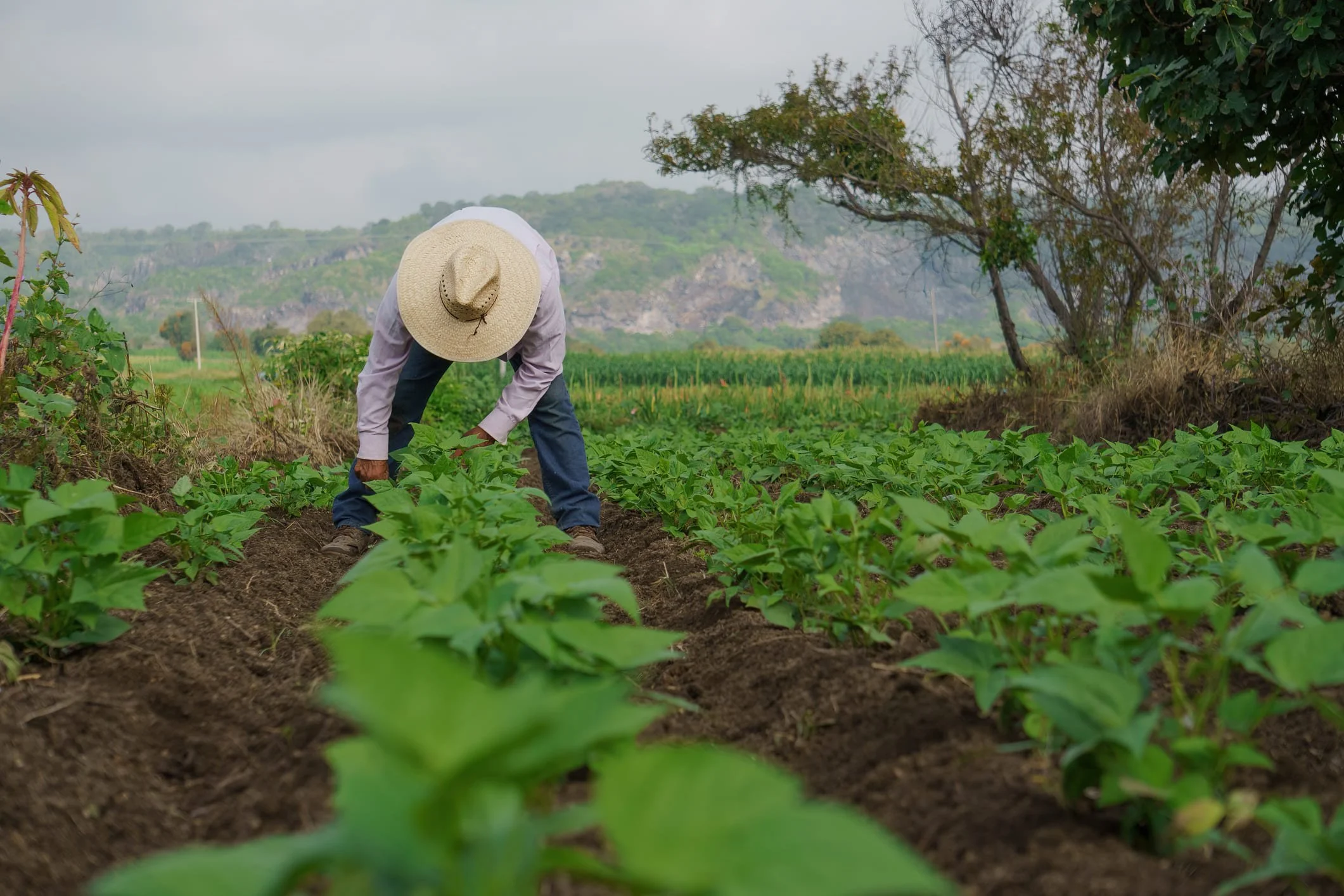
Photo by: NAILOTL- iStock
Food and agriculture systems provide nurture, fibre and fuel for humanity. As well as supporting the livelihoods of more than 4 billion people, they are enmeshed in the fabric of our histories, cultures, societies. Agriculture and food systems are fundamental to our survival – but they are at risk.
Currently around one-third of agricultural land is affected by human-induced land degradation and deterioration, which in turn is affecting around 1.5 billion people. We are losing 17 billion tonnes of global cropland and 36 billion tonnes of topsoil each year to land degradation and deterioration. This costs US$300 billion in agriculture production every year and significantly undermines food and nutrition security.
We must stop this cycle. As part of the global goal to conserve and restore 1.5 billion hectares by 2030 for a land-degradation-neutral world, we need to restore 250 million hectares of degraded agricultural land.
Investments of at least US$260 billion a year are needed to halve current food and agriculture systems’ emissions by 2030. While the cost of the transition is high, the cost of inaction is much higher, with hidden social, economic, and environmental costs, amounting to US$10 trillion per year – roughly 10% of global GDP.
Restoring degraded agricultural lands, conserving and restoring nature, and transforming food and agriculture systems offers an opportunity to address the interconnected nature, water and food challenges, nourish people, safeguard environments, uplift rural economies, and strengthen resilience.
So if the stakes are so high, and the opportunities so big, what's being done?
Read on to find out...
UNCCD COP16, Riyadh — Agri-food systems day highlights and momentum
Key announcements of the day
The Riyadh Action Agenda: announced by H.E. Dr. Osama Ibrahim Faqeeha, Undersecretary of Environment of the Ministry of Environment, Water, and Agriculture of the Kingdom of Saudi Arabia, this initiative by the UNCCD COP16 Presidency harnesses the collective energies of diverse non-state actors, together with state actors, to promote ambitious, voluntary action and partnerships in support of the UNCCD goal of restoring 1.5 billion hectares of degraded land by 2030 to achieve land degradation neutrality. Learn more at riyadhactionagenda.org.
Actors unite at High-Level Dialogue behind bold actions to accelerate the transition towards sustainable, inclusive and resilient agri-food systems: The session set out a pathway for multi-stakeholder collaboration to contribute to the UNCCD’s goal of restoring 1.5 billion hectares of degraded land and 250 million hectares of farmland by 2030 through the agri-food systems component of the Riyadh Action Agenda.
More than 50 million food producers call on governments and funders to recognise the key role of family farmers: Belén Citoler, Director of World Rural Forum, highlighted the role of small-scale family farmers producing a third of the world’s food and being on the front lines of the climate crisis, but receiving just 0.3% of international climate finance to adapt.
USD$6 billion of collective investments in regenerative agriculture announced: Diane Holdorf, Executive Vice President, WBCSD, announced that investments by members of the Action Agenda on Regenerative Landscapes have now reached over $6bn - nearly a threefold increase since its launch at COP28. The initiative involves over 35 participants, spans 110 countries and aims to cover more than 80 commodities and 280 million hectares by 2030. Notably, Brazil, host of COP30, accounts for the largest share of these efforts. The Landscapes Accelerator - Brazil aims to further accelerate these efforts in the Cerrado. Find out more here.
New report on breaching of planetary boundaries: Stepping Back from the Precipice, produced under the leadership of Prof. Dr.Johan Rockström at PIK - Potsdam Institute for Climate Impact Research, in collaboration with UN Convention to Combat Desertification , charts an urgent course correction for how the world grows food and uses land in order to avoid irretrievably compromising Earth’s capacity to support human and environmental wellbeing. Read the report.
Global Flagship Initiative for Food Security announced: the 5-year flagship initiative, represents a unified global effort to address desertification, land degradation, and their socio-economic impacts. It aims to deliver scalable, science-driven solutions that prioritise food security, climate resilience, and rural economic development across Africa’s most vulnerable regions. Learn more here.
Happening in Riyadh
We sat down with frontline actors attending the conference. This is their have a message for the UNCCD COP16 (translated transcripts below):
SARA OMI - Embera People President of the Coordination of Territorial Women Leaders of the Meso-American Alliance of Peoples and Forests
My message for this COP is that when we talk about the land, we're talk about our mother Earth - of that voice that we need to continue to reinforce, by promoting equity as a matter of right. Us, indigenous women have worked to empower agricultural practices that adopt ancestral knowledge, which promotes living in balance with the land, to repair and heal Mother Earth.
MATEUSZ CIASNOCHA - Poland Representing European Carbon Farmers
My message to the COP16 in Saudi Arabia and other Rio Conventions on climate and biodiversity is very simple: visit a farmer. If you go to the COPs, whoever you are, especially if you are a negotiator, farmers want to meet with you and want to show how they grow their food.
CRISTIANE GOMES JULIÃO - Pankararu people Articulation of Indigenous Peoples of Brazil (APIB); co-founder of the National Articulation of Indigenous Women Warriors of Ancestrality (ANMIGA); representative of the National Council on Indigenous Policy (CNPI); Sectorial Chamber of Indigenous Peoples, Traditional Peoples and Communities and Family Farmers (Chamber of Guardians)
My key message to this COP is we are going to save the critical Brazilian region of the Caatinga; we are going to save the San Francisco basin. And we need the help of everyone, of all of you, please!
ALBERTO ERCILIO BROCH - Brazil President of the Enlarged MERCOSUR Confederation of Family Producers' Organizations - COPROFAM; Vice-President of the World Rural Forum; Vice-President of the National Confederation of Rural Workers, Farmers and Family Farmers - CONTAG
It is very important that the UNCCD COP16 progresses to a deeply rooted debate towards tackling desertification. Now we want that with this year's experiences in the biodiversity, climate and now the land COP, all of us unite at COP30 in Brazil in November 2025.
RICHARD KACHUNGU - Zambia Co-Founder of the Young Emerging Farmers Initiative
My message for the COP is that it needs to ensure that there is a true focus, narrowed down through people. Interventions should be centered on young people and Indigenous Communities. I expect from the UNCCD COP16 that the Riyadh Action Agenda is implemented effectively, what this can do for my country is it can enhance collaboration between farmers, my government and other players in the food system.
JONATHAN GICHURU - Kenya Early career environmental specialist and emerging thought leader at YPARD and CA4SH Youth Working Group
My message is that as a young person, I understand that we are the generation that will lead land restoration. The Riyadh Action Agenda sets the tone, supporting the target to restore 1.5 billion hectares of land [by 2030]. We young people can help advance soil and land health, using our voices, engaging in advocacy, through community engagement and education, science and technology.
BONNIE JUPP - Australia RegenWA Programme Manager
What I have come away with from this COP16, there are a lot of synergies. Everyone agrees that we depend on land for food, fibre and shelter. So there needs to be a collective responsibility to ensure we transform our food systems into more regenerative ones that support ecosystem services, and the responsibility and onus shouldn't just be on farmers. It should be their voices alongside Indigenous communities at the forefront of decision-making so that we can have clear and effective action.
ALAN PETERSEN - Fiji Chairman of TeiTei Taveuni; Representing the Pacific Farmers Organisation
My message to everybody out there is that when coming here to COP16, everybody is on the same page. We have to look after our soils, because they are the source of life.
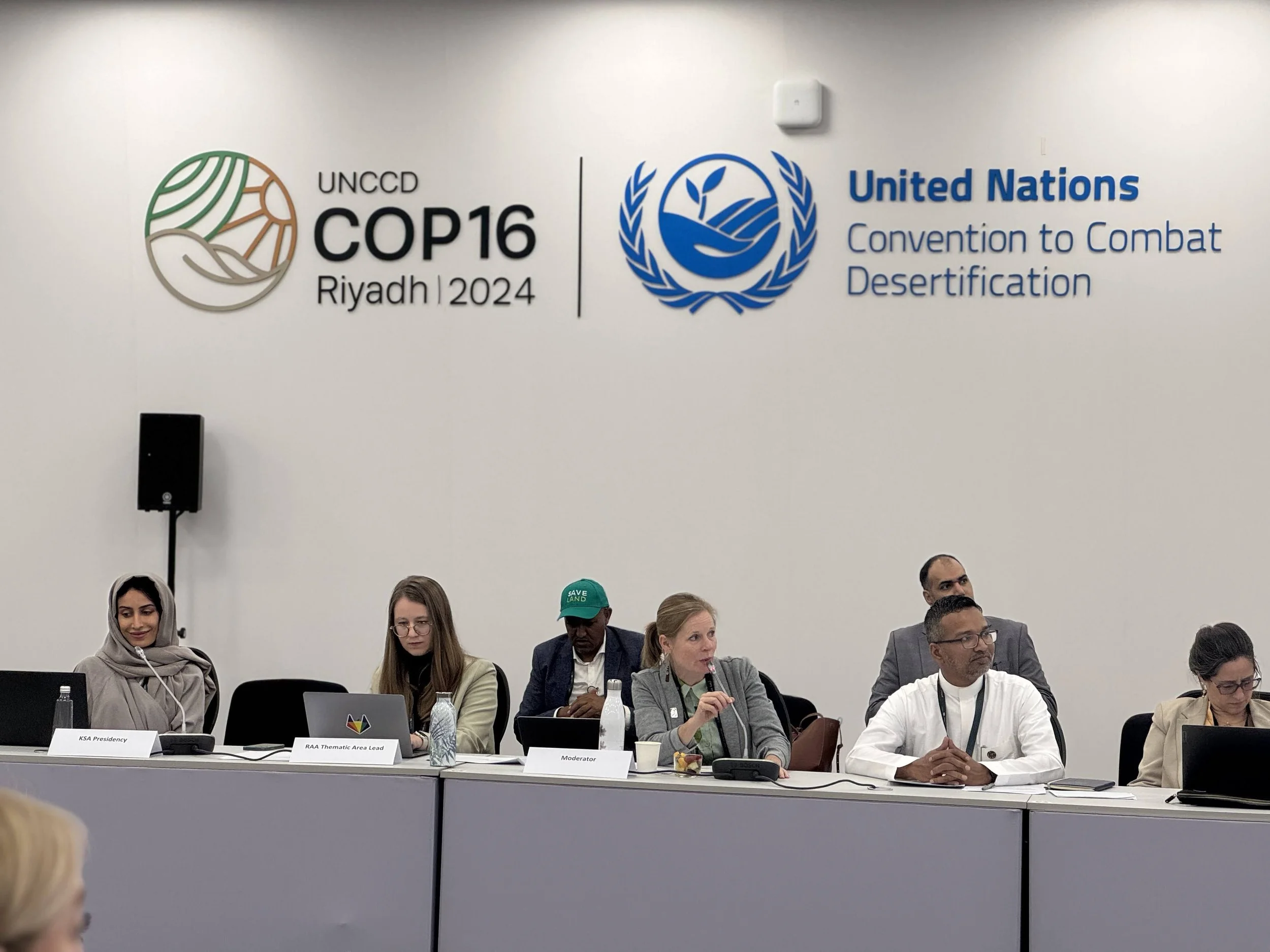
Riyadh Action Agenda multi-stakeholder dialogues on Land
A diverse group of actors convened in these Multi-stakeholder dialogues on Land, to share their feedback, insights and expertise that will be considered in the development of the Riyadh Action Agenda.
See the photo album here.
So what?
From companies, financial institutions, regions, cities, academic research and educational institutions, philanthropy bodies, farming groups and agri-food businesses, to civil society groups, as well as indigenous peoples, local communities, women and youth – we all have key roles to play.
You're invited to join the Riyadh Action Agenda - the UNCCD's first action agenda to empower non-state actors and government action to contribute to the UNCCD’s goals.
Enjoyed this post? Subscribe to the newsletter!
This blog post was authored by the RAA Delivery team (Ambition Loop) as part of the Lay of the Land LinkedIn newsletter. Liked it?
