
From Riyadh to Ulaanbaatar: civil society sets the terms for COP17 at Djerba
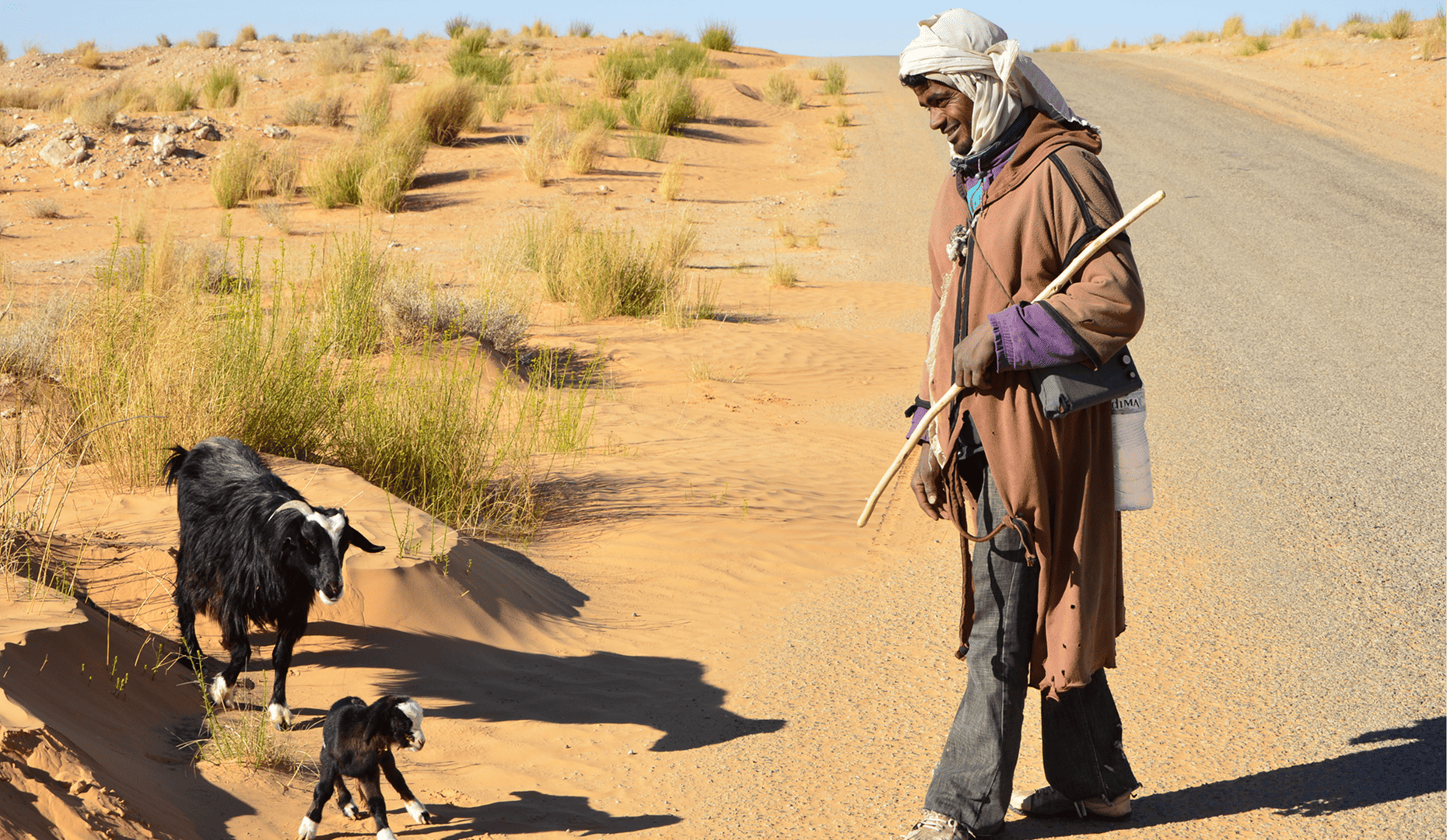
Photo by: @YGH - iStock
Last month, on 25–28 March, the sixth edition of the Désertif'actions Summit convened in Djerba, Tunisia. Over 500 voices from 50 countries gathered not simply to discuss the road to COP17 (17-28 August, Ulaanbaatar, Mongolia), but to co-construct the civil society case for it: working groups, plenary outputs, and advocacy drafts that map directly onto the formal negotiations as well as the thematic days at Ulaanbaatar.
The programme tackled sedentary farming and livestock system transformation; support for mobile and pastoral production systems; regional management of water resources; and territorial management for Land Degradation Neutrality (LDN) alignment.
Who was in the room, what were the key takeaways and what’s coming up? Read on for a lay of the land…
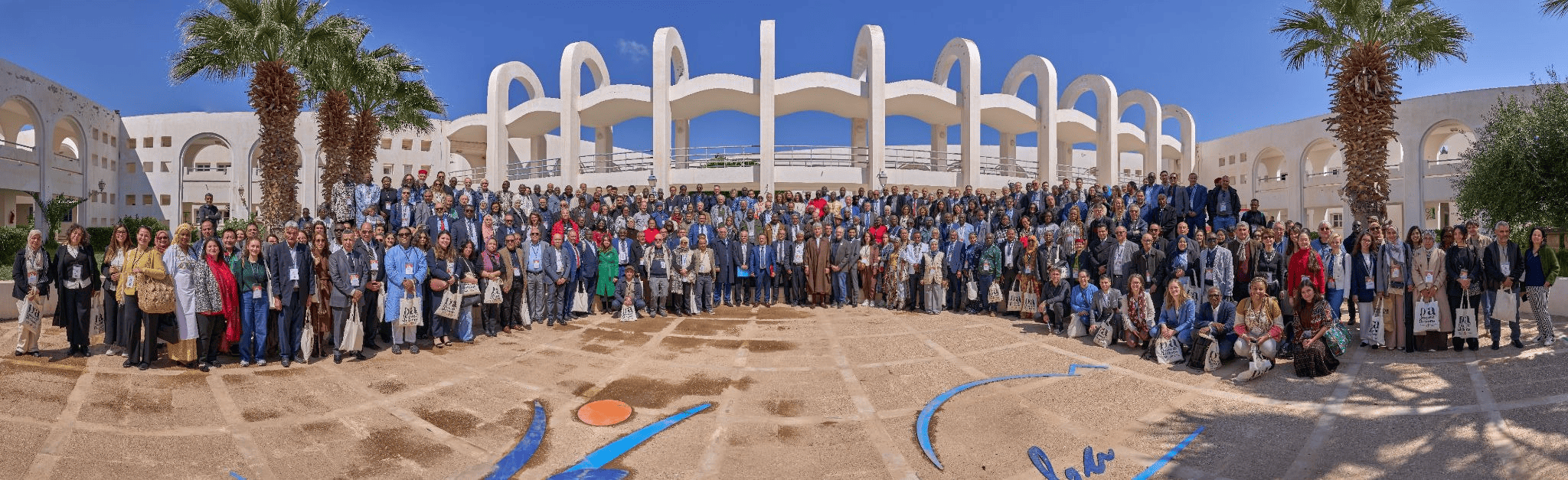
Desertif'actions 2026 - Djerba, Tunisia (photo credits: Wael Silex)
This year’s Desertif’actions Summit, one of the most important global gatherings for civil society working on land degradation, was notable for the coherence of its outputs. Working groups across eleven topics produced recommendations with outstanding clarity, alignment and directness. While the Summit report will be published in the coming weeks, these are our top takeaways:
1. The solutions already exist. But to scale them, gaps need addressing
Community-owned sand dams are delivering year-round water access in dryland communities, governed locally and replicable without centralized infrastructure.
OSS-led early warning systems combining hydrometeorological data with community engagement are showing how anticipatory drought management can move from pilot to regional standard.
Pastoral mobility is now backed by evidence that livestock movement actively restores soil fertility and ecosystem function, reframing it as a restoration practice in its own right.
Far from being emerging ideas, these are proven solutions. But, to scale them, the gaps from knowledge to policy to finance to implementation need to be filled urgently.
2. The urgency isn’t a hyperbole, it’s existential
We were repeatedly reminded of the sobering trajectory assessment that, at the current pace, we’re fast approaching ecological and food system collapse. Drought is the clearest signal of this. By 2050, three in four people worldwide are projected to face drought conditions; 700 million are already exposed.
The call was clear: incremental progress is no longer sufficient; we’re sitting at a critical inflection point. Ambition, finance, and implementation must now move together – and at a speed that meets the scale of the challenge.
3. Pastoralism is having its political moment that can’t be wasted
The most energized debates in Djerba were around rangelands and pastoral governance. The working group on pastoralism, with facilitation headed by the International Land Coalition, surfaced that the narrative is shifting: from "marginal livelihood system" to central climate adaptation strategy; from "local issue" to global policy priority.
The International Year of Rangelands and Pastoralists (IYRP) has generated real momentum, but participants were clear that one-off international years must evolve into permanent institutional and financing structures.
COP17's Rangelands Flagship Initiative – a Mongolian Presidency priority – is the next critical moment to lock in that shift. The ask for Ulaanbaatar: pastoralists must be able to produce and control their own data, mobility must be recognized as a legitimate land use and climate adaptation strategy, and land tenure security must follow.
4. The big call for efficiency: strengthened Rio Synergies
In sight of this triple-COP year, the Rio Synergies working group in Djerba, co-facilitated by Ambition Loop and the Agroecology Coalition , called for the three COP Presidencies to develop a shared agenda, for interministerial coordination at national level to bring the three focal points together, and for financial mechanisms to integrate their work programmes to reduce competition and duplication. In an era where multilateral coordination demands even greater efficiency, this kind of structural coherence increasingly constitutes a prerequisite for delivery.
5. Finance and measurement: the infrastructure gaps that COP17 must address
Two technical debates carried outsized significance for what happens next. The first was on the "bankability" of land restoration: why projects are not reaching investment stage despite available capital, what systemic bottlenecks are preventing viable pipelines from forming, and how to close the gap between financial ambition and financeable action.
The second was on measurement: a strong technical push to move away from generic resilience indicators toward context-specific principles, and to distinguish between fast and slow ecological variables in monitoring frameworks.
With only 2.3% of global climate finance primarily targets gender equality – a concerning figure given that women farmers and pastoralists play a central role in sustaining dryland landscapes – both debates point to the same underlying needs: financing that is equitable, inclusive and transparent, supported by more sophisticated accountability infrastructure.
📢 Highlights from the field
A new section highlighting the community driving action for healthy landscapes, resilient ecosystems and thriving economies.
CARI and OSS: Bringing 500+ voices from 50 countries to the UNCCD
We can’t talk about Desertif’actions without mentioning CARI and OSS, who, together with UNCCD, didn't just organize a summit – they enabled the co-construction of the people's case for Ulaanbaatar.
Association CARI has spent nearly three decades connecting agroecology, family farming, and international advocacy in the arid drylands of the Sahara. A co-host of Désertif'actions, it led facilitation of the "Road to COP17" plenary and structured the working groups that produced the summit's advocacy outputs – connecting field practice directly to the UNCCD negotiating process. At Ulaanbaatar, CARI will carry those outputs into the CSO Observer space, ensuring the 500+ voices from Djerba have a seat at the table.
Observatoire du Sahara et du Sahel (OSS) Sahara and Sahel Observatory brings regional science and institutional depth across 27 African member states. As the newly designated headquarters of the Centre for Technical and Scientific Cooperation for Africa, it bridges normative UNCCD frameworks with the operational realities of cross-border drylands management. At COP17, OSS's monitoring and early warning expertise will be directly relevant to one of the summit's sharpest gaps: turning drought commitments into accountable, measurable action.
WOCAT: Getting proven land practices into the right hands
WOCAT - World Overview of Conservation Approaches and Technologies is a UNCCD-recognized global network that documents and shares knowledge on sustainable land management — putting verified, field-tested practices directly in the hands of practitioners worldwide. With COP17 set to spotlight scalable models of restoration and SLM, WOCAT's knowledge infrastructure is exactly what the RAA needs to back its claims: a living library of what works, where, and for whom. Its presence at Désertif'actions — where 500+ practitioners and advocates co-constructed the civil society ask for Ulaanbaatar — signals that the evidence base for COP17 is being built from the ground up.
French Water Partnership: the road to Water Day in Ulaanbaatar
French Water Partnership is one of Europe's most active platforms connecting public institutions, NGOs, research bodies, and the private sector around water governance and resilience. It arrived at Désertif'actions as a key voice on regional water resource management – one of the four themes that will define COP17's thematic days. Water Day (25 August) in Ulaanbaatar is set to advance proactive drought risk management and integrated water resource cooperation, and FWP's combination of financing relationships and technical credibility makes it a critical ally for turning the Djerba water agenda into concrete COP17 commitments.
The Saudi Green Initiative reports the restoration of 1 million hectares
The Saudi Green Initiative has confirmed a milestone of 1 million hectares of land brought under restoration — a powerful signal of political will, as we build up to COP17, and a demonstration that land restoration at scale is possible, even amidst the most arid environments. Learn more here.
So what?...
The 500+ voices that gathered in Tunisia for Desertif’actions were clear: the solutions exist, the momentum is real. What's needed now is an architecture that can hold it all together, measure it, and show the world that it’s working, to increase political will and whole-of-society confidence to drive positive impact. With this mission in mind, the following contributing Riyadh Action Agenda tools coming in the next months will support partners and decision-makers toward COP17.
Monitoring Framework: The RAA is developing the accountability architecture for its 100+ initiatives – the infrastructure that will make the RAA's claims auditable, translating partner commitments into trackable outputs and outcomes, and ultimately into progress against the Land & Soil Breakthroughs. It is, in essence, the RAA's answer to the question every serious partner eventually asks "What does it all add up to?"
Finance Report: The first publication produced by the RAA Delivery Team to assess the landscape of public and private finance relevant to the RAA's goals, and to demonstrate growing interest among financial institutions in land restoration as an investable space.
Enjoyed this post? Subscribe to the newsletter!
This blog post was authored by the RAA Delivery team (Ambition Loop) as part of the Lay of the Land LinkedIn newsletter. Liked it?
