
Land restoration in motion – the untold story of rangelands
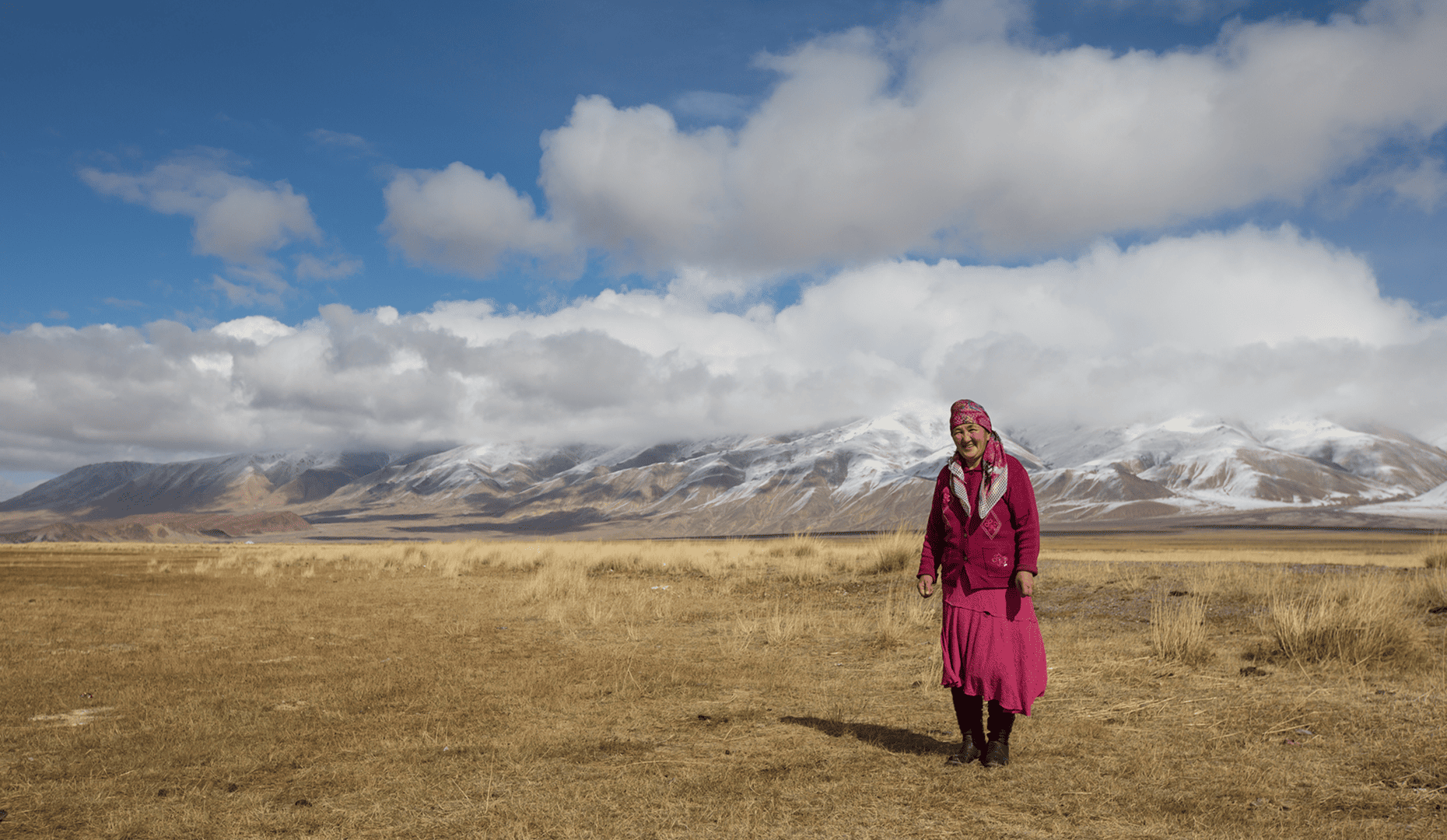
Photo by: @Katiekk - iStock
When global conversations turn to degraded land, the default image is retreating forest edges and satellite images of clearcuts. But more than half the story remains untold. In this issue we draw our focus to rangelands – grasslands, savannahs, shrublands, deserts, and tundra, covering 54% of the planet's terrestrial surface.
Alarmingly, the UNCCD estimates that up to half of it is already degraded, costing roughly one sixth of global food supply and one third of the Earth's terrestrial carbon reservoir.
But 2026, the International Year of Rangelands and Pastoralists, could change this. All eyes are turning to UNCCD COP17 (18-27 August) , hosted by Mongolia – the world's most rangeland-dependent country – setting the ambition for the decade.
So where is the ground already moving? And what is the scope of the opportunity? Read on for a lay of the land…
🌾 Half a billion stewards. One underpriced asset.
Conventional narratives frame rangelands primarily as an ecological concern – carbon stocks at risk, biodiversity under pressure. While true, these narratives undersell the case.
Rangelands are also an economic and social system that has been functioning for millennia. More than 500 million people depend on rangelands for their livelihoods. Pastoralists manage over 38 million km² of land – an area larger than Africa – using mobility strategies developed over generations, precisely calibrated to the variability of dryland ecosystems. They produce roughly 10% of the world's meat supply and significant shares of its dairy, wool, and leather. They are, in every meaningful sense, the custodians of the world's largest land use.
Yet pastoralists and rangeland communities remain drastically underrepresented in the processes that shape their futures. Only 10% of national climate plans reference rangelands at all. Investment in rangeland restoration and governance lags far behind its ecological and economic potential. And land tenure insecurity – the absence of recognized rights to the land communities that have stewarded for generations – remains one of the central barriers to restoration investment at scale. This last point has direct consequences for capital – which is where the picture is beginning to change.
💰 The bankability of land restoration
One of the most important questions in land restoration is deceptively simple: can it be financed at scale through the blended finance structures and corporate commitments that move capital at speed? The evidence is building that it can.
Capital for Climate’s NbS Investment Pipeline is worth over USD 45 billion, and Riyadh Action Agenda (RAA)-related opportunities make up over half of the pipeline, reflecting rising investor interest in restoration, regenerative agriculture, and other solutions
The LDN Fund – the UNCCD's own blended finance vehicle – mobilized over USD 200 million from public and private investors for sustainable land management across three continents, with private capital representing the majority of its close. Its fully deployed portfolio of 13 projects is now the foundation for a successor fund targeting €350 million.
And, when it comes to rangeland restoration, the old argument that the returns are too uncertain and the transition period too long to attract private capital is being debunked.
Brazil's EcoInvest programme demonstrated what national-scale blended finance for pastureland restoration can look like: USD 3.2 billion in public capital catalyzing a further USD 2.5 billion from private investors in a single auction round, restoring up to 3 million hectares of degraded grazing land. This model is now a reference model for FAO-led RAIZ: the global farmland restoration accelerator already backed by ten countries – whose ambition is to replicate it wherever degraded land and under-mobilized capital meet.
Finance institutions and blended finance vehicles with land or agriculture and food mandates are invited to show, through the RAA platform, where their capital is moving – and to connect with the restoration pipeline that needs it. Get in touch with the RAA delivery team to learn more by emailing land@ambitionloop.earth.
The finance architecture is being built. Below, a look at the on-the-ground practices that make restoration investable in the first place.
📢 Highlights from the field: replicable and scalable restoration in practice
Land tenure as a prerequisite, not an afterthought
Every credible restoration practitioner knows that land tenure security is a precondition for durable outcomes. Without it, communities lack the incentive and the legal standing to invest in long-term stewardship. Without it, finance cannot flow on land whose ownership is contested or unclear.
The International Land Coalition’s Global Rangelands Initiative works at the global, regional and country levels (spanning Africa, Asia and Latin America) to strengthen land tenure security for pastoralists and other local rangeland users by connecting partners, influencing policy and legislation, and mobilizing innovative solutions. Among its achievements, its Participatory Rangeland Management (PRM) project – a four-year project to enhance the livelihood and nutrition status of pastoralists, agro-pastoralists, and local communities by improving rangelands management in Kenya and Tanzania – has secured nearly 247,000 hectares of rangelands to date.
Landesa works directly on this challenge, integrating land rights frameworks into restoration programmes in dryland regions. Their work on securing access and ownership rights for the frontline actors who steward these lands enables long-term investments in climate-smart agriculture, reduces conflict over resources, and empowers historically relegated groups like women to break cycles of intergenerational poverty, impacting the lives of over 700 million people to date. Learn more about their work here.
In Kenya, host of this year’s Desertification and Drought Day (17 June), IMPACT Kenya is a powerful local example of efforts to secure communal land tenure for indigenous pastoralists and hunter-gatherers by advocating for legal reforms and mapping ancestral territories. This work transforms customary claims into recognized legal rights, which empowers frontline communities to practice sustainable stewardship, preserving both biodiversity and traditional livelihoods against competing land claims, development pressure, and historical dispossession. Visit their website for more information.
Agri-food businesses shifting from exposure to engagement
For agri-food companies and commodity traders, land degradation is not a distant ecological concern – it is a supply chain risk. Sourcing landscapes that are degrading produce less, more variably, and at higher cost. Soil compaction reduces yields. Watershed degradation disrupts water access. Biodiversity loss erodes the ecological services that underpin agricultural productivity.
Business4Land (B4L) – an RAA-aligned initiative engaging 400+ business leaders – is working to translate this exposure into commitment. Working alongside members such as Nexira, which is strengthening the gum acacia sector through capacity-building for producers, including women, towards the responsible forest management of 300,000 hectares by 2030; and LVMH, which is on track to its 2030 goal to rehabilitate 5 million hectares of wildlife habitat including through regenerative agriculture, B4L supports the private sector to place land at the heart of business strategy.
If you’re a private sector actor, we encourage you to check the B4L Guide on Corporate Disclosures and Target-Setting for Land: a practical resource developed by the UNCCD Global Mechanism to help private sector actors translate their land-related commitments into credible, trackable action.
So what?...
Across the examples in this issue, a consistent pattern emerges: the conditions for durable restoration are governance conditions. Secure land rights give communities the standing to make long-term investments. Clear accountability frameworks give investors the confidence to deploy capital. And the knowledge systems of pastoralists and Indigenous land managers – precisely calibrated to the variability of dryland ecosystems over centuries – represent a competitive advantage that remote sensing technology alone cannot replicate. The practical question is not whether this knowledge works. It is how quickly it can be recognized, resourced, and connected to the finance and governance infrastructure being built now.
That means measurable progress across hectares reported by partners engaged in SLM and rangeland restoration; commitments from agri-food businesses; capital mobilized toward land conservation and restoration; and replicable models documented and ready to travel. This will be visible on the RAA Community Dashboard, launching in Bonn this June as a land conservation and restoration one-stop hub.
At UNCCD COP17 in Ulaanbaatar, the Rangelands Flagship Initiative will formally launch – the first dedicated multilateral coordination mechanism for rangeland conservation, restoration, and investment at scale. Developed as a Mongolian Presidency priority and building on the landmark COP16 decision on rangelands and pastoralists. It will consist of three components: developing supporting knowledge products, including guidance on assessment of rangeland health, and cost-benefit analysis of rangeland restoration; developing a portfolio of rangeland restoration investment projects; and strengthening institutions to promote rangeland policy and investment. The RAA Community will be there, demonstrating the non-state action and momentum that supports the Flagship with a real-world anchor.
Enjoyed this post? Subscribe to the newsletter!
This blog post was authored by the RAA Delivery team (Ambition Loop) as part of the Lay of the Land LinkedIn newsletter. Liked it?
