
The next critical step for land restoration and drought resilience
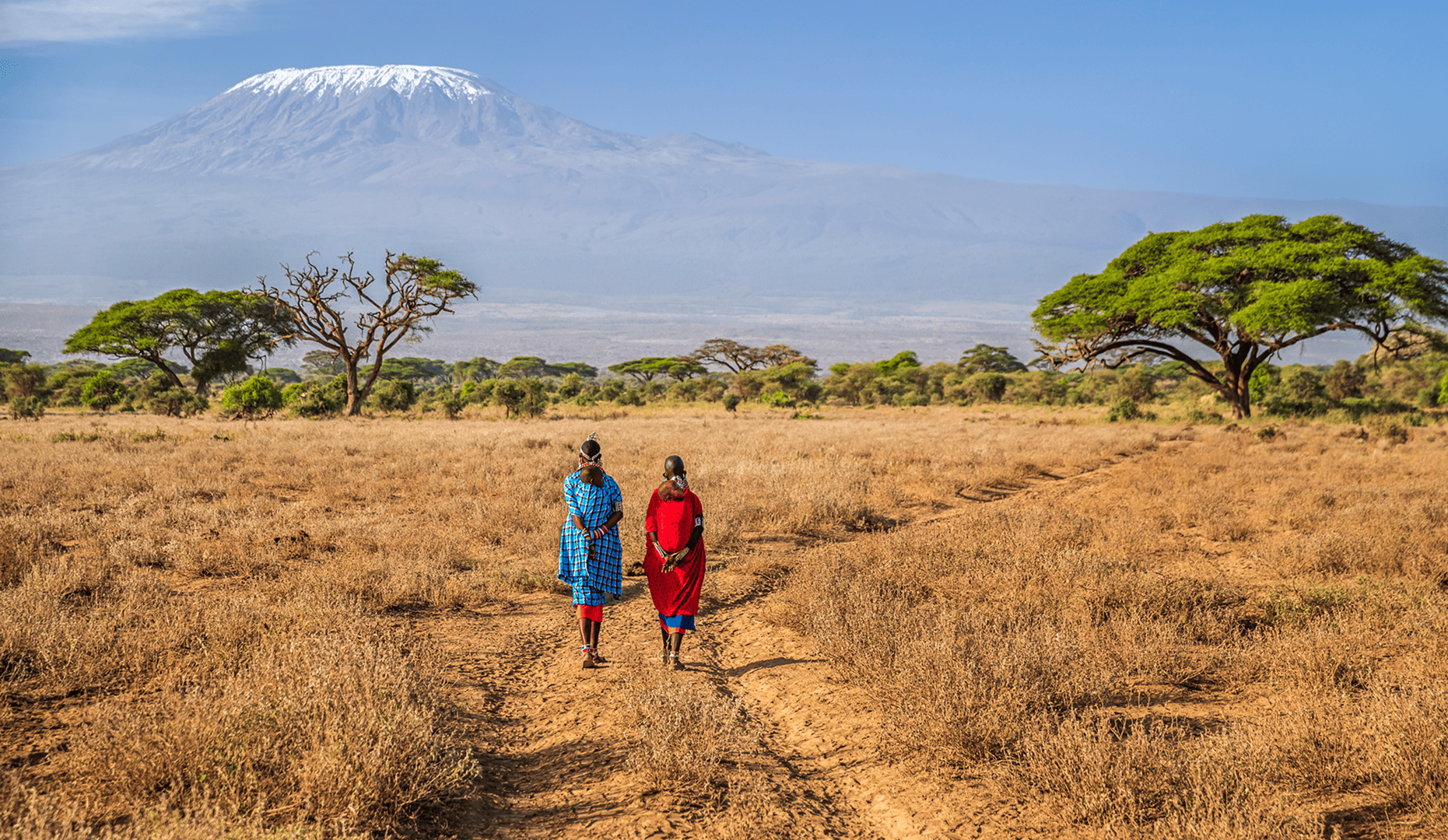
Photo by: hadynyah - iStock
If you've worked in sustainability, agriculture, or natural resource management, you've likely experienced a pattern: high-level goals announced at global summits, generating genuine excitement and commitment, which soon morphs into the overwhelming challenge of delivering concrete actions that businesses can invest in, governments can regulate around, and communities can implement on the ground.
For land restoration, conservation and drought resilience, UNCCD COP16 (Riyadh, 2024) demonstrated momentum that hasn’t stopped growing behind the global consensus on the imperative to:
Conserve and restore 1.5 billion hectares of degraded land - including restoring 250 million hectares of degraded agricultural land;
Boost drought and water resilience, protecting 30% of lands and inland waters; and
Mobilize $2.1 trillion toward these goals — all by 2030.
But now, with growing impetus for action, and UNCCD COP17 around the corner (17-28 August, Ulaanbaatar, Mongolia), all hands on deck are needed to turn ambition into a roadmap for accelerated solutions. So, how is the Riyadh Action Agenda helping this happen and how can you get involved?
Read on for a lay of the land…
A triple-COP year kicking off with UNCCD COP17
2026 presents exceptional momentum across the biodiversity, climate, and land degradation agendas, with the three Rio Conventions hosting COPs this year.
Launching at the first of the Rio trio – UNCCD COP17 – the Land & Soil Breakthroughs will add to this energy, as an actionable framework with strong foundations for clear governance, delivery mechanisms, and accountability structures.
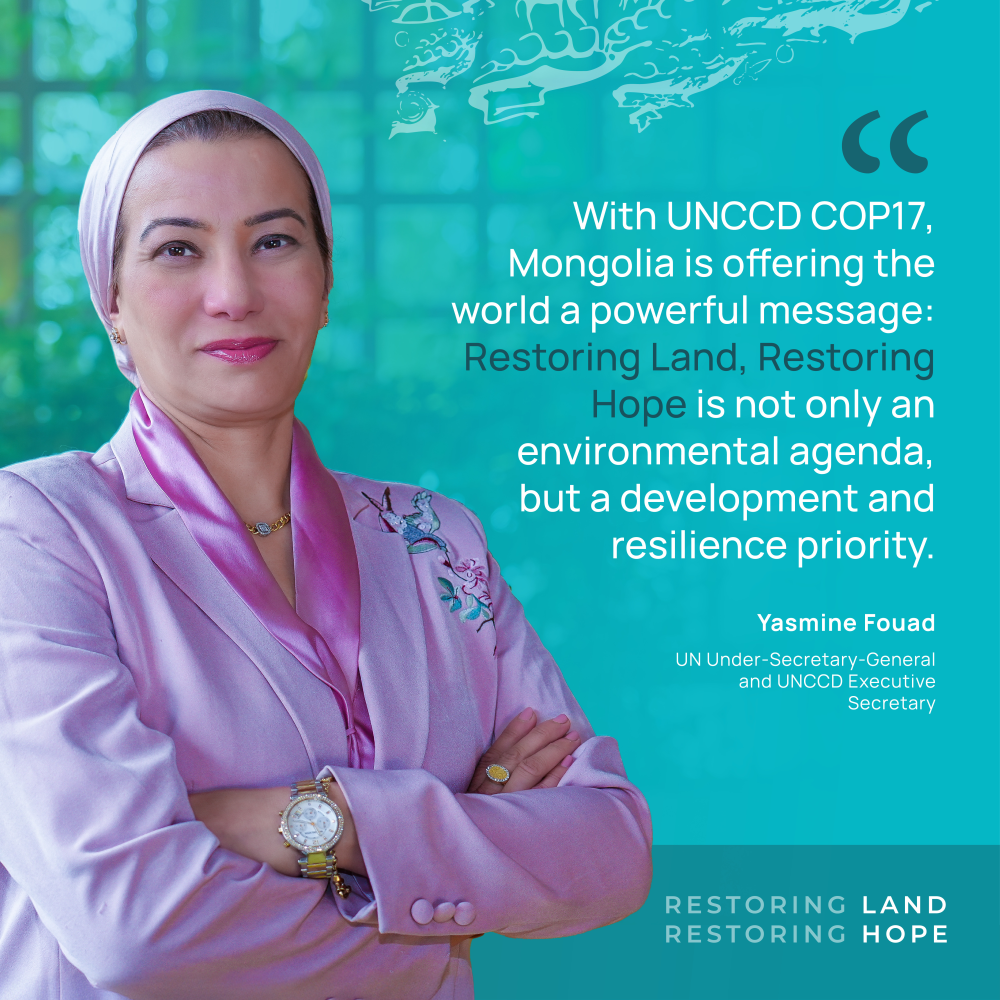
Dr. Yasmine Fouad, UN Under-Secretary General and UNCCD Executive Secretary. Image Credits: UNCCD
Embodying this year’s COP17 theme “Restoring Land, Restoring Hope”, the Breakthroughs will act as vehicles to demonstrate what is possible when state commitments are matched by coordinated real-world action:
Private capital knowing where to flow;
Regional governments and communities being empowered to lead land restoration processes;
Modern science and ancestral knowledge informing innovation for regenerative, resilient landscapes; and
Impact being tracked transparently to build investor confidence and inform policy.
And the ground is just the beginning. Supporting healthy land and soils is vital for people, climate and biodiversity. So enabling pathways for land restoration, conservation and drought resilience presents a huge opportunity to support the delivery of global climate and biodiversity goals too.
What are the Land & Soil Breakthroughs?
The Land & Soil Breakthroughs are a set of measurable, time-bound milestones for global land restoration and drought resilience. They function as a practical roadmap that diverse actors—from agribusinesses to financial institutions, to regional governments, and frontline communities—can rally around in practice.
Put another way: if the Riyadh Action Agenda (RAA)’s 2030 goals are the final destination, the Land & Soil Breakthroughs are the progress markers along the way.
Real collaboration for real momentum
The Land & Soil Breakthroughs will only be as strong as the buy-in from the actors who will actually deliver them. For this reason, their development is anchored by a participatory process, supported by a diverse group of expert partners in the RAA Community, who bring the expertise and perspectives of cross-sectoral actors.
Last month, at the CIFOR-ICRAFheadquarters in Nairobi, the Riyadh Action Agenda convened thefirst Technical Working Group workshop for the Land & Soil Breakthroughs. In this hybrid session, 45 experts, representing more than 30 initiatives and organizations came together to:
Generate structured, action-oriented inputs under the three Action Areas and enablers of the RAA;
Identify priority indicators, baseline sources, and monitoring systems;
Highlight key gaps across tenure security, finance alignment, data credibility and capacity;
Identify delivery bottlenecks at local, national, and global levels; and
Map entry points for expanded partnerships and regional engagement.
Get a sneak peek: Read the session report and check out the working Land & Soil Breakthroughs here.
Report Cover: First Riyadh Action Agenda Technical Working Group Session
So what…
We're currently facing the potential loss of an area the size of Latin America to land degradation in the next 25 years. But we're also looking at opportunities to create 60 million jobs through restoration by 2030. The difference between these future scenarios isn't about resources, it's about coordination.
Whether you work in finance, food and agriculture, governance or academia, the Land & Soil Breakthroughs offer clarity on where collective action is heading, and how your work contributes to it. They're about creating the infrastructure of accountability and collaboration that makes ambitious goals achievable. And your engagement will be essential to their success. Here’s what you can do:
1. Join the community
The Land & Soil Breakthroughs exemplify what the Riyadh Action Agenda is becoming—not just a framework, but a functioning ecosystem. The RAA Community has grown to include 100+ supporting initiatives that are already aligned with its high-level goals, committed to driving collective impact, and reporting their progress.
Learn more and formalize your support for the Riyadh Action Agenda, by expressing your interest and sharing your land restoration and conservation, drought and water resilience, and/or financial mobilization commitments and progress via the official online form.
The Global Flagship Initiative for Food Security is one of more than 100 cross-sectoral initiatives who have shared their support for the RAA and joined the RAA Community.
2. Deepen your engagement, invite others along
Through its updated endorsement framework, joining the Riyadh Action Agenda Community is a simple 3-step process, offering several degrees of engagement – including becoming an active contributor to the Land & Soil Breakthroughs.
So, if you’re already part of the RAA Community, consider taking the next step to become an active partner, and/or invite others to join (a simple gesture like reposting or forwarding this article can make all the difference).
With special thanks to the RAA Community members who have already contributed to the development of the Land & Soil Breakthroughs. Together, we can save our land and protect our future:Acts for Change Trust , Alliance for Food Sovereignty in Africa (AFSA) , Association CARI , Biovision Africa Trust, Cadasta Foundation , Landscape Alliance | CIFOR & ICRAF , Coalition of Action 4 Soil Health (CA4SH) , Climate High-Level Champions , Crop Trust , ELD - Economics of Land Degradation Initiative , Food and Land Use Coalition (FOLU) , Greifswald Moor Centrum , IMPACT Kenya , International Land Coalition , ISFAAKenya , IUCN , International Water Management Institute (IWMI) , Landesa , One Acre Fund , PELUM Kenya Association , Robert Bosch Stiftung , Prince Sultan University , Conscious Planet , TMG Think Tank for Sustainability , Tree Aid , UN Decade on Ecosystem Restoration , UN Environment Programme , UN Convention to Combat Desertification CSO Mechanism, UNCCD Science-Policy Interface, World Resources Institute , WWF , Woodwell Climate Research Center
Enjoyed this post? Subscribe to the newsletter!
This blog post was authored by the RAA Delivery team (Ambition Loop) as part of the Lay of the Land LinkedIn newsletter. Liked it?
