
Leveraging scientific innovations to scale up access to context-specific information, tools and support
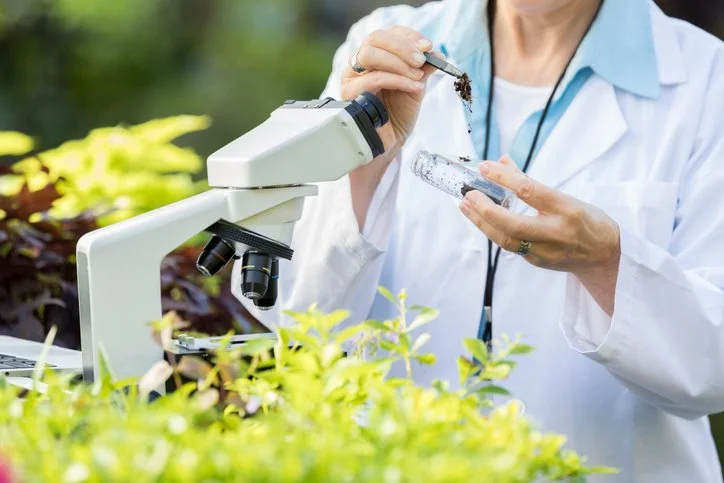
Photo by: SDI Productions - iStock
The scientific evidence is clear and resounding: six of the nine planetary boundaries have already been breached, and if these continue unabated, both nature and humanity face a bleak future.
With our support system failing, we are experiencing multiple interlinked crises, from food, energy and water insecurity to disease outbreaks, natural-resource based conflicts, displacement and forced migration.
While science cannot address all the underlying drivers of these intersecting crises, it can enhance a shared understanding of cause and effect and rally different stakeholders around a set of agreed priority actions. Emerging technologies such as artificial intelligence and machine learning can also greatly speed up access to crucial early warning information for vulnerable countries and communities, as well as the international community, enabling early action to avert looming disasters.
Through tools such as true cost accounting, science can also help policy makers to better understand and navigate potential tradeoffs in restoration actions: such as the impact of increased biofuel production on biodiversity loss, or agricultural subsidies that incentivise the production of just a handful of commodities, undermining local diets and biodiversity, with broader impacts on food markets and local livelihood systems.
Informed decision making, especially at the national and local levels, requires access to context-relevant data and information that can empower all actors to take the needed transformative actions.
Science can further support holistic responses by generating multi-layered maps that visually convey how biophysical indicators such as biodiversity loss or drought risk, interface with socioeconomic indicators, such as multidimensional poverty. Such information can help pinpoint “hotspots of vulnerability” in a more precise way, enabling timely and coordinated support that is aligned to local needs and priorities.
But what does the latest science have to say and how do we translate it into action?
Read on to find out what the experts have to say...
Happening on the ground in Riyadh
Land day highlights and momentum
UNCCD announce two new science policy briefs:
The global threat of drying lands: Regional and global aridity trends and future projections, warning that 77.6% of the Earth’s land became permanently drier between 1990-2020, compared to the previous 30-year period (1961-1990). Over the same period, drylands expanded to an area nearly a third larger than India, the world’s 7th largest country – and now cover more than 40% of all land on Earth (excluding Antarctica). Access it here.
Sustainable Land Use Systems: The path to collectively achieving Land Degradation Neutrality, presents science-based evidence concerning sustainable land use systems (SLUS) and the potential of the SLUS approach to achieve land degradation neutrality targets, reduce inequalities, achieve social justice, improve economic viability and, consequently, help achieve multiple United Nations sustainable development goals and targets. It aims to guide countries to use SLUS to apply more effective management of natural resources and the environment. Assess it here.
CGIAR Issue Series of Briefs for UNCCD COP16: offering practical tools to support the field of landscape partnerships. See more here.
Regional Dialogue Forum of Small Island States for use and sharing of data: which will serve as scoping phase for global science policy on land.
UNDP plans to integrate WOCAT's standardised monitoring tool into all its projects to address challenges in collecting and comparing credible data across project lifecycles (baseline, mid-term, and end-line). The tool aims to be user-friendly and accessible to member states, reducing dependence on costly, underutilised tools.
WOCAT's Participatory Monitoring Approach: The PMERL (Participatory Monitoring, Evaluation, Reflection, and Learning) platform emphasises empowering local stakeholders to articulate their needs and learn collaboratively throughout project implementation and beyond.
Sustainable Land Management (SLM) progress calculator is a tool under pilot testing to monitor progress in sustainable land management, integrating participatory workshops, evidence-based assessments, and sharing lessons learned for adaptive management.
Riyadh Digest: what the experts have to say
We sat down with Lee Winowiecki, Wael Bushah (MEWA, Kingdom of Saudi Arabia), and Bernadette Arakwiye to discuss how science and innovation on land and soil is being made more accessible, inclusive and effective in the battle to tackle desertification and land degradation.
So what?
Supporting the UNCCD COP16 Presidency, the Kingdom of Saudi Arabia, we’re working with hundreds of partners to build the Riyadh Action Agenda: a global platform, mobilising ambitious, voluntary commitments and action from governments and non-state actors, to conserve and restore 1.5 billion hectares of land by 2030 – helping deliver a prosperous future for all.
The Riyadh Action Agenda, a platform for all interested actors, partners and initiatives to contribute to the UNCCD goals and objectives, complements formal UNCCD negotiations, and promotes alignment with the UN Conventions on Climate and Biodiversity.
Enjoyed this post? Subscribe to the newsletter!
This blog post was authored by the RAA Delivery team (Ambition Loop) as part of the Lay of the Land LinkedIn newsletter. Liked it?
